


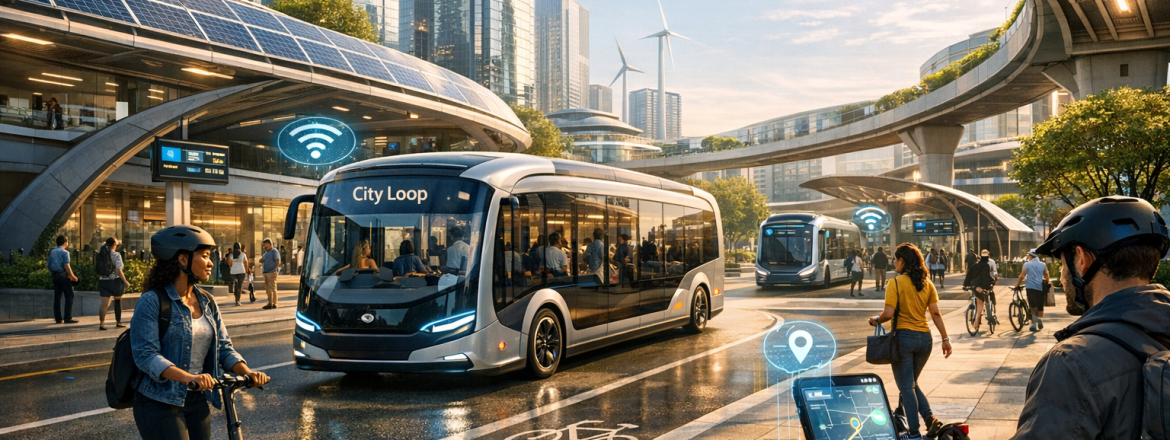

The transit industry is experiencing a revolutionary transformation in 2026, driven by technological innovation, sustainability mandates, and massive infrastructure investments. From AI-powered systems to electric fleets and autonomous vehicles, the sector is witnessing its most significant evolution in decades.
AI and Automation Reshape Urban Mobility
Artificial intelligence is transforming transportation planning by integrating real-time data from market signals, weather, economic indicators, and customer behavior. Cities are implementing AI systems that allow planners to ask questions in plain language and employ geospatial visuals to develop ideas for improving roadways and identifying optimal locations for transit stops.
Level 4 autonomous taxi services are already operational in several cities globally, including China and the UAE, and are expanding in cities like San Francisco and Phoenix. These autonomous networks are expected to reduce traffic accidents significantly, as human error accounts for over 90% of crashes. Coordinated autonomous systems could also cut fuel consumption and emissions by up to 18% through smoother traffic flow.
Electrification Accelerates Across Fleets
The shift toward zero-emission vehicles is gaining unprecedented momentum. Transit agencies nationwide are transitioning their fleets to electric buses, supported by the development of advanced charging infrastructure. The development of Megawatt Charging Systems promises ultra-fast charging for heavy-duty vehicles, reducing downtime and enabling long-haul electric transport.
Commercial fleets are following suit, with companies replacing diesel trucks with electric alternatives. This transition not only reduces emissions but also lowers operational expenses as battery technology improves and charging times decrease.
Infrastructure Investment Reaches Historic Levels
The global transportation infrastructure construction market is expected to expand from $3.65 trillion to $3.83 trillion in 2026, representing a compound annual growth rate of 5%. This growth is fueled by government infrastructure programs and urban transport network expansions.
The tunnel market alone is experiencing substantial growth, expanding from $27.74 billion in 2025 to $29.52 billion in 2026, driven by rising demand for urban transit systems and investments in public transportation. Looking ahead to 2030, the tunnel market is projected to reach $38.6 billion.
Mobility-as-a-Service Goes Mainstream
Mobility-as-a-Service platforms are transforming how people navigate cities. These integrated systems combine public transit, bike-sharing, ride-hailing, and other transportation options into single apps for easy planning, booking, and payment. Platforms such as Helsinki’s Whim and Berlin’s Jelbi have become mainstream by offering riders integrated transportation options.
This approach offers multiple benefits: flexibility for users who can choose the best option for each trip without car ownership, cost savings by avoiding expenses like maintenance and parking, reduced traffic congestion, and lower emissions. Cities adopting MaaS could see a 20% reduction in transportation-related carbon emissions by 2030.
Rail Industry Consolidation and Innovation
The proposed Union Pacific-Norfolk Southern merger is creating significant momentum across the rail ecosystem. Investors are evaluating suppliers and services supporting track infrastructure, railcar maintenance, leasing, inspection technology, and transloading operations as they look to capture value around rail industry consolidation.
This consolidation is driving innovation in rail-adjacent sectors, with companies focusing on scalable platforms that have customer volume commitments and high regulatory barriers to entry.
Looking Ahead
The transit industry in 2026 is characterized by convergence—where technology, sustainability, and infrastructure investment meet to create more efficient, cleaner, and accessible transportation systems. As cities prepare for major events like the 2026 FIFA World Cup and the 2028 Los Angeles Olympics, the pressure to modernize infrastructure and improve service reliability has never been greater.
Riders expect public transit to be as convenient and smart as their phones, offering dependable, clean, and affordable journeys, supported by technology that makes travel predictable and integrated across all options. The industry’s response to these expectations is shaping a new era of urban mobility—one that promises to be faster, greener, and more connected than ever before.
The transformation underway in 2026 isn’t just about adopting new technologies; it’s about fundamentally reimagining how people and goods move through our cities and across our regions. With smart planning, strategic investments, and continued innovation, the transit industry is positioning itself to meet the mobility challenges of the 21st century.
The Future is Now: 2026 Transit Industry Transformation